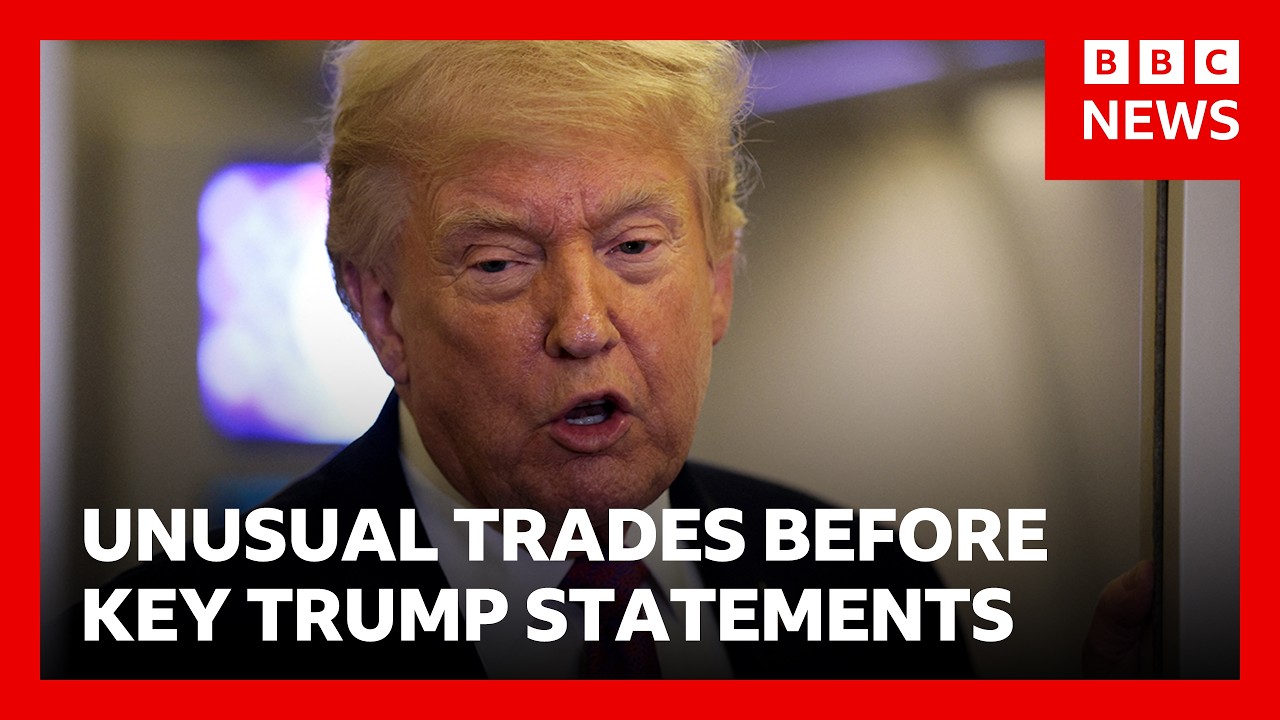
The recent findings by the BBC have ignited a firestorm of debate over potential insider trading related to President Donald Trump’s public statements, particularly amid heightened tensions such as those during the Iran conflict. The investigation reveals troubling patterns in financial markets, where spikes in trading activity occur mere minutes before Trump makes significant announcements. Such irregularities raise questions about the integrity of the trading environment, particularly when substantial profits seem to be made through mechanisms like short selling.
On March 23rd, a particularly striking instance unfolded. Trump, after a weekend of aggressive rhetoric aimed at Iran, unexpectedly tweeted that the United States had made significant progress in resolving hostilities with Tehran. This announcement coincided with a dramatic drop in oil prices by 14%, a reaction not surprising in itself given the context. However, an examination of trading volume data revealed a substantial increase in oil futures contracts exchanged just 14 to 16 minutes prior to the tweet. This spike involved hundreds of millions of dollars, suggesting that certain traders had positioned themselves advantageously before the public announcement, leading to significant financial gain.
These instances prompt an exploration of whether traders have developed an acute intuition for predicting Trump’s pronouncements or whether something more nefarious, such as insider trading, is at play. Insider trading, which involves leveraging non-public information for personal financial gain, can undermine the integrity of markets and cause significant public distrust. The patterns observed in relation to Trump’s interventions raise serious ethical concerns.
Moreover, the world of prediction markets has gained traction as an alternative for speculating on various events, including geopolitical possibilities. Platforms like Polymarket and Kalshi allow users to place bets on a wide range of outcomes, from weather forecasts to significant political shifts. The simplicity of these platforms lies in their yes or no structure—will a specific event occur, or won’t it? These markets have seen increased participation around American military actions, with some users amassing considerable wealth by taking calculated risks.
One notable example involves a user who accrued impressive earnings by betting on the ousting of Venezuelan President Nicolás Maduro, following credible reports of U.S. military involvement. This kind of astute timing in trading linked to real-world events raises flags regarding the ethical boundaries of such behaviors. While these platforms have claimed to uphold market integrity and have established measures to combat insider trading, the close relationship between political events and market movements cannot be overlooked.
In response to inquiries about these issues, the White House has maintained a stance of deniability, insisting that insider trading does not involve any administration official. They assert a commitment to preventing any form of illegal profiteering. However, the repetitive timing of market fluctuations juxtaposed with Trump’s public statements continues to catalyze skepticism among financial analysts and the public alike.
It’s crucial to consider the broader implications of these findings. If there is a pattern of traders consistently anticipating market-relevant announcements, it begs the question of market manipulation—not through direct insider knowledge, but through an uncanny ability to read the underlying currents of political rhetoric. The intersection of politics and finance can create a murky environment where ethical lines blur, complicating the narrative surrounding transparency and accountability in trading practices.
As these discussions unfold, it is essential for regulatory bodies and market participants to maintain rigorous scrutiny over trading environments, especially those influenced by political announcements. The findings presented by the BBC illustrate not only the complexities of modern finance but also the pressing need for comprehensive regulations that can effectively address the unique challenges posed by real-time data and political unpredictability. The potential consequences of ignoring these alarming trends could reverberate throughout the financial markets, diminishing public confidence and engendering a climate of suspicion that can detract from the ethos of fair trading.